
Identify Who Owns an Oakland County Property
No countywide assessor roll sits with the Oakland County Register of Deeds. Each city or township assessor keeps the live assessment record. County systems then link that record to a KeyPIN. They also link it to recorded instruments. Treat the first name a query returns as a lead. It is not a final answer.
- Search the situs address in its municipal assessor portal or the county Property Gateway, then save the PIN or KeyPIN.
- Read the taxpayer or owner field as the current assessment-roll lead, along with its mailing address.
- Search that PIN and owner name in the Oakland County Super Index, then identify the newest deed naming the grantee.
- Compare the deed's legal description with the parcel, and route entity or estate names to the proper supporting record.
A misspelled street, wrong suffix, or misleading postal city can send a search astray. The parcel number is the durable bridge. It connects municipal records, county GIS, and deed records without ambiguity. Keep the address, local Sidwell or PIN, county KeyPIN, and newest document number distinct. Do not collapse them into one identifier.
Use Oakland County's Owner Field as a Lead
The assessment roll offers the fastest official clue to the owner of record. But the originating municipality controls it. Troy's Parcel Information Center plus the Farmington Hills and Rochester Hills BS&A hubs show how local access works. Elsewhere in Oakland County, start with the city or township assessor. The county's Property Gateway takes an address or PIN. It ties parcel identity to report and map products.
Copy the owner or taxpayer name exactly as shown. Grab the situs, owner mailing address, parcel number, classification, and any sale date too. Remember that the tax roll follows an annual cycle. So it can lag a recent closing. The roll may also list a taxpayer without explaining every title interest.
The official Oakland Property Gateway search turns an address into a parcel key. That key carries forward to deed records.
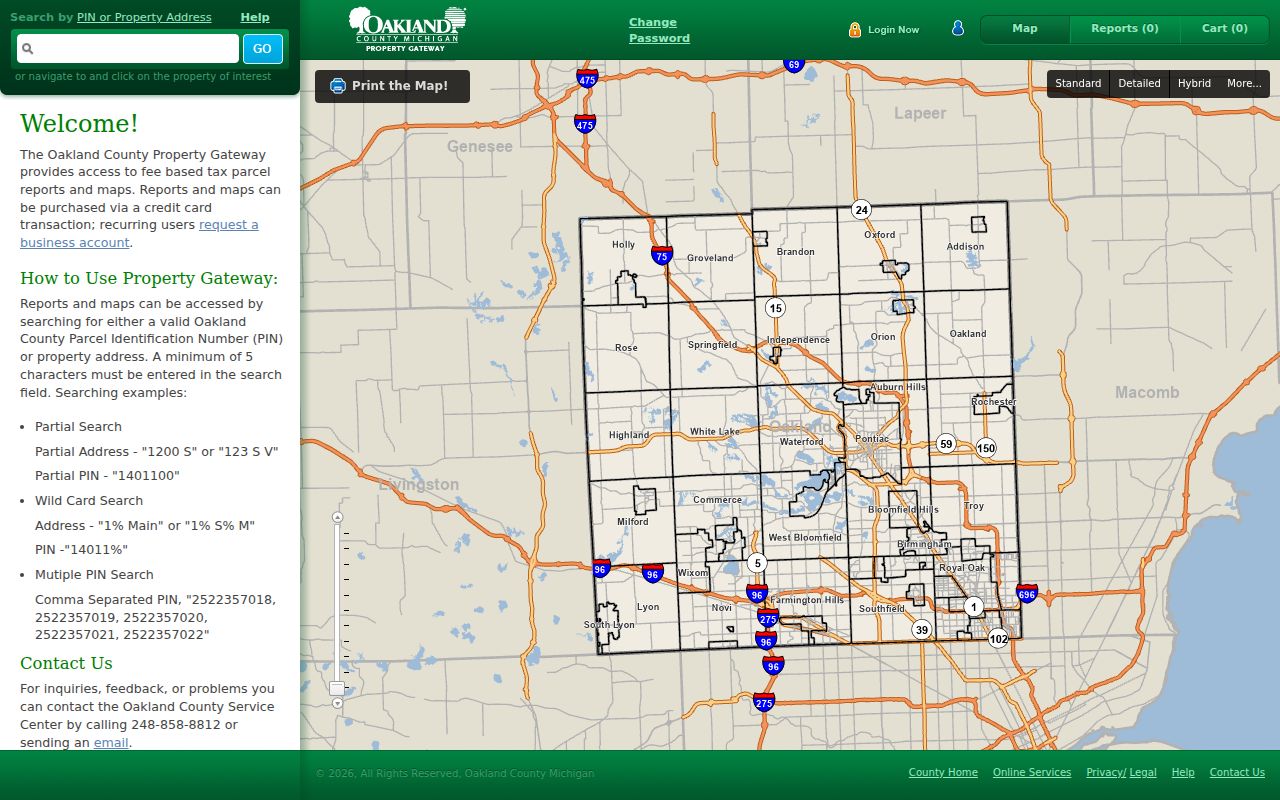
Because the query works from an address or PIN, its owner field is a lead. Deed confirmation still has to follow before anyone treats it as a title finding.
Separate Oakland County Situs and Mailing Addresses
The situs address is where the parcel physically sits. The mailing address is where the local assessor sends notices. That second address might be a post-office box, an office, or an out-of-state location. A mismatch between the two proves nothing about occupancy or record accuracy.
- Owner of record
- The party named by the public roll, subject to its update cycle and deed confirmation.
- Grantee
- The party receiving the interest in a recorded deed.
- Situs address
- The street location assigned to the parcel.
- Mailing address
- The destination used for assessment and tax correspondence.
Use the mailing address for lawful property contact. Do not infer where a person lives from it. Keep both addresses on hand, because a name search or mailed inquiry may hinge on the difference.
Note: A postal city or ZIP helps route mail, but it does not decide which Oakland municipality maintains the assessment roll.
Trace the Oakland County Property Owner to a Deed
The Oakland County Super Index supplies the confirmation layer. Search the exact PIN first. If nothing comes back, try dashed and undashed forms. Then try the owner name, address, or date range. A good result lists party roles, document type, and recording date. It also gives a document number or liber/page citation. Legal descriptions and PINs sometimes appear as well.
The newest grantee deed matching the same legal description beats an older roll entry as evidence. Even so, a recorded deed is not a legal opinion. Mortgages, liens, easements, releases, assignments, and probate matters can all encumber a parcel. None of them change the fee owner.
The Super Index screen displays the grantor-grantee search that performs this deed records check.
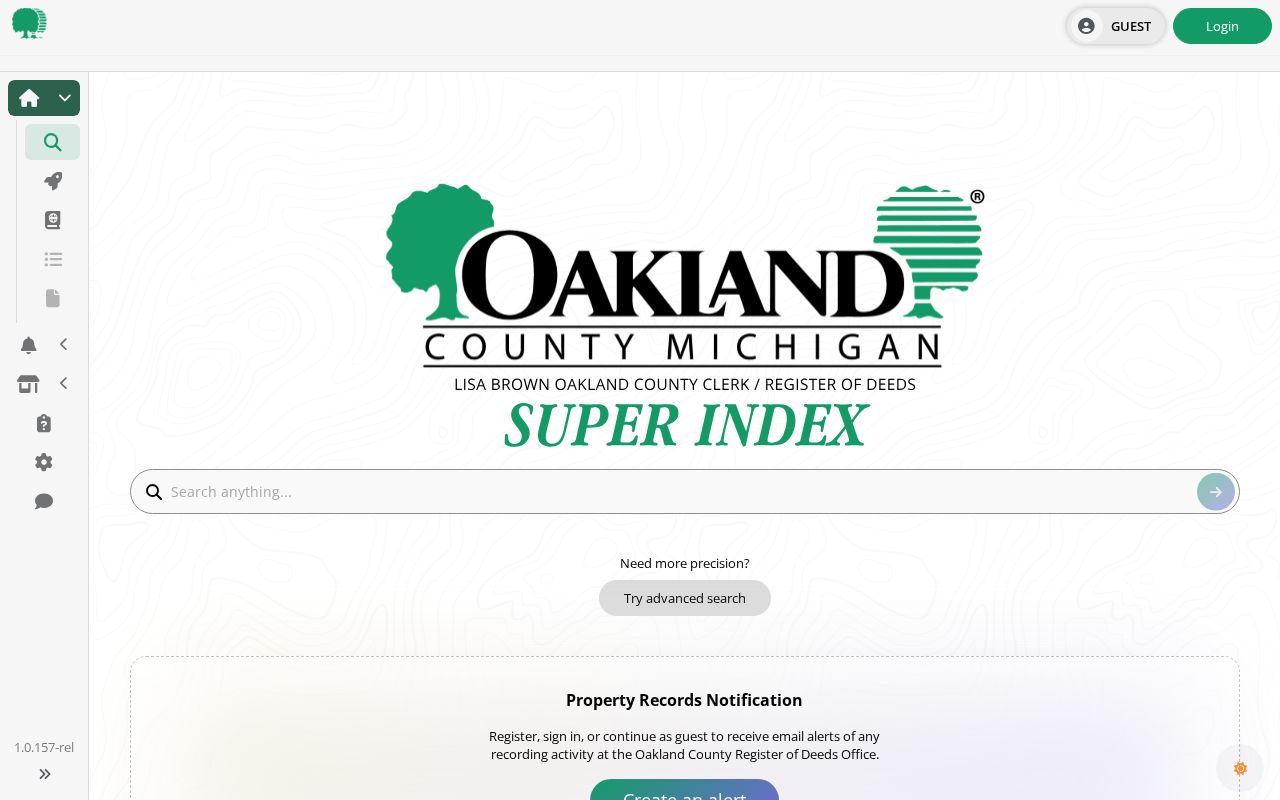
Record the recording date and document key from any result. Matching the grantee to the same parcel depends on them.
Read LLC, Trust, and Estate Owners in Oakland County
An Oakland County parcel may list an LLC as its owner of record. It may also list a trust, personal representative, or estate. That is not a failed lookup. It simply reflects how the interest or taxpayer is held. Copy the name and role exactly, and keep the entity record apart from the deed.
For an LLC, the Michigan Corporations Division can supply registered-office, agent, and filing context. The MiBusiness Registry launched in June 2025. Certificates or copies may require MiLogin. A registered agent is a contact point. It is not proof of beneficial ownership. Trust names can force a walk through earlier deeds. A personal-representative deed may point to an Oakland County Probate Court file.
Title limit. An assessment-roll name is not a title search, and ownership may be held through an LLC, trust, estate, or other recorded interest.
When an Oakland County Owner Name Looks Stale
A deed can be recorded first. Staff then add names and legal descriptions to the searchable index. That staged workflow explains why a document exists yet fails an owner-name query. Do not assume the record is absent. Search by PIN, document number, recording window, and both parties.
If the online image sits behind a paywall, buy a single image through the Super Index cart. Staff in Real Estate, Tract Index, or Microfilms can also help. The public counter sits at 1200 N Telegraph Road, Building 12E, Pontiac. It operates Monday through Friday, 8:30 a.m. to 4:30 p.m. Bring the PIN, address, legal description, party names, and an approximate date. Phone and mail copy orders work too.
Michigan FOIA, MCL 15.231 et seq., can reach an existing nonexempt record. It helps when the normal portal or copy path does not. A written request should name the parcel, record type, date range, and preferred electronic format. FOIA cannot force the office to build a title analysis.
Where Oakland County Property Ownership Appears
Ownership clues in Oakland County live in three separate places. The assessment roll carries the current administrative owner of record. The deed index shows every transfer. GIS maps each parcel number to a drawn boundary. Their update schedules differ, and so does their legal weight. Treat them as layers to reconcile, not rivals.
| Source | Owner Info It Gives | Access |
|---|---|---|
| Municipal assessment roll | Owner or taxpayer, mailing address, situs, value, and parcel facts | Local portal, assessor counter, phone, mail, or FOIA |
| Super Index | Grantee, grantor, deed type, date, and document reference | Free index search; paid details/images; county copy service |
| County GIS and Property Gateway | KeyPIN, parcel geometry, and linked parcel attributes | Open parcel service or Gateway reports/maps |
| Michigan entity records | Registered agent, office, status, and filings for an LLC | MiBusiness Registry search; login for some orders |
The parcel number is the thread that ties these layers together. For current ownership detail, the Oakland County current-owner guide digs into roll freshness and the newest deed.
Watch an Oakland County PIN for Later Changes
Once you confirm an owner of record, Oakland County offers a free Property Records Notification service. It watches the Super Index. You can set alerts on a name, an address, a document type, or a PIN. The county recommends a precise ten-digit PIN. Broad name alerts tend to fire on unrelated filings. That noise defeats the purpose.
An alert only tells you that indexed activity matched your subscription. It cannot judge fraud, fix a deed, or replace title monitoring. Pull the instrument itself. Compare the legal description and party roles. Contact the Register of Deeds or law enforcement if a filing looks wrong.
Note: Verify the newest deed first, then subscribe to the precise parcel PIN so future alerts stay tied to the intended land.
Limits of an Oakland County Ownership Lookup
An Oakland County owner of record tells you who holds legal title, nothing more. It does not list every occupant. It cannot prove mail reaches anyone. A deed record also will not resolve claims that were never recorded. GIS map polygons serve as reference features rather than boundary surveys. Treat their lines as approximate. Michigan's Safe at Home program can substitute a designated address for eligible participants in covered public records. That means a public address is not always a residential location.
Put Oakland County property records to practical use: buying or selling due diligence, boundary and easement questions, estate research, and deed-fraud checks. Plain civic understanding counts too. For high-stakes decisions, confirm what the property records show with the custodian. A qualified title professional can settle anything that remains unclear.
Lawful use. Oakland County owner information supports legitimate property research. Do not use a public name or address to stalk, harass, intimidate, or harm anyone.